

Introduction: Why SWOT Analysis Is the Simplest Yet Most Powerful Tool in Business
Every investor, business owner, or student needs a structured method to understand a company’s true potential. SWOT Analysis is one of the most trusted frameworks used by analysts, CEOs, and investors globally. It helps break down a company into four parts — Strengths, Weaknesses, Opportunities, and Threats — giving a crystal-clear view of where a company stands today and how it may perform in the future.
Simple, visual, and extremely effective — SWOT is essential before investing in any stock or evaluating any business strategy.
1. What Is SWOT Analysis?
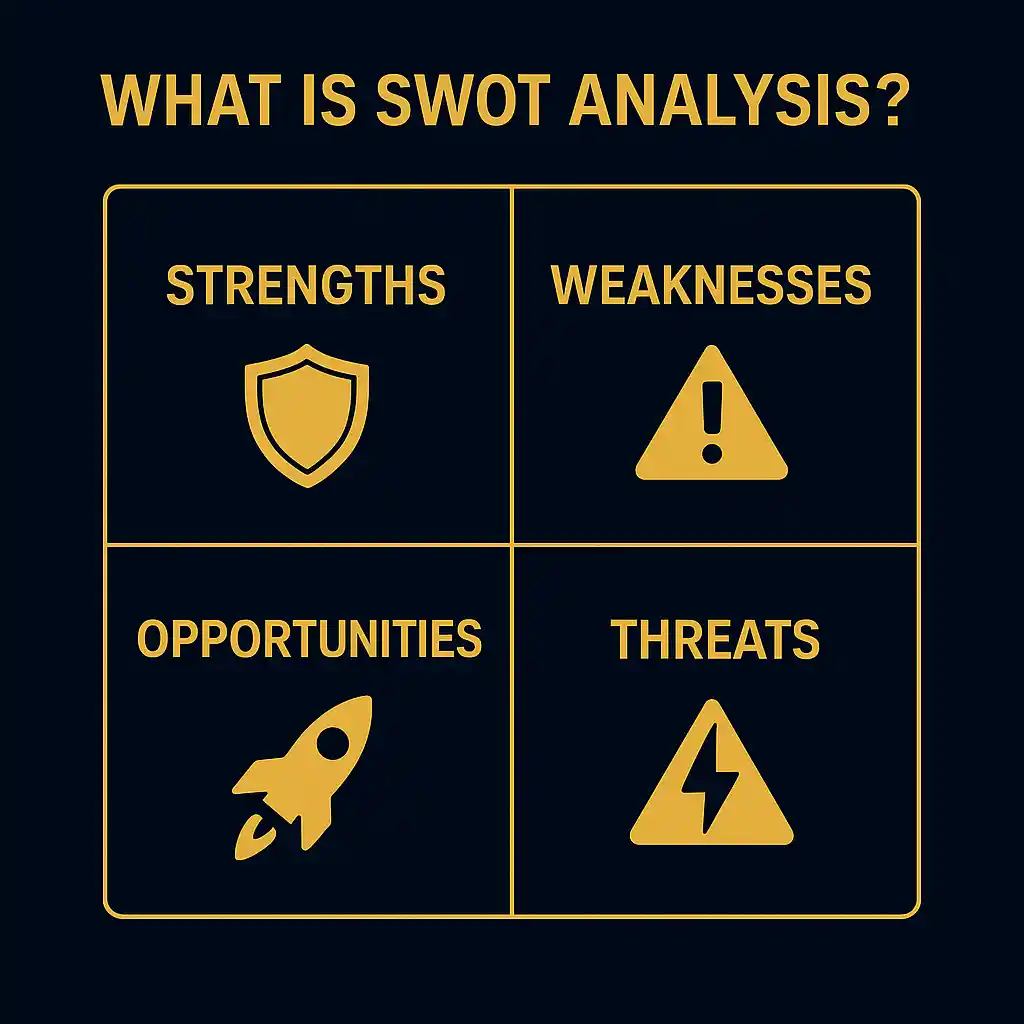
SWOT stands for:
- Strengths — What the company is good at
- Weaknesses — What is holding the company back
- Opportunities — Future possibilities for growth
- Threats — External risks that may harm the business
This framework helps you evaluate internal factors (S & W) and external factors (O & T).
2. Why SWOT Analysis Is Essential for Investors
For stock market investors, SWOT helps in:
- Understanding long-term potential
- Evaluating competitive advantage
- Identifying growth triggers
- Analyzing risks before investing
- Avoiding over-hyped or weak companies
Every multibagger stock in history showed strong strengths and opportunities early on — and SWOT makes them easier to identify.
3. How to Do SWOT Analysis of Any Company Step-By-Step
A. Strengths: What Makes the Company Powerful?
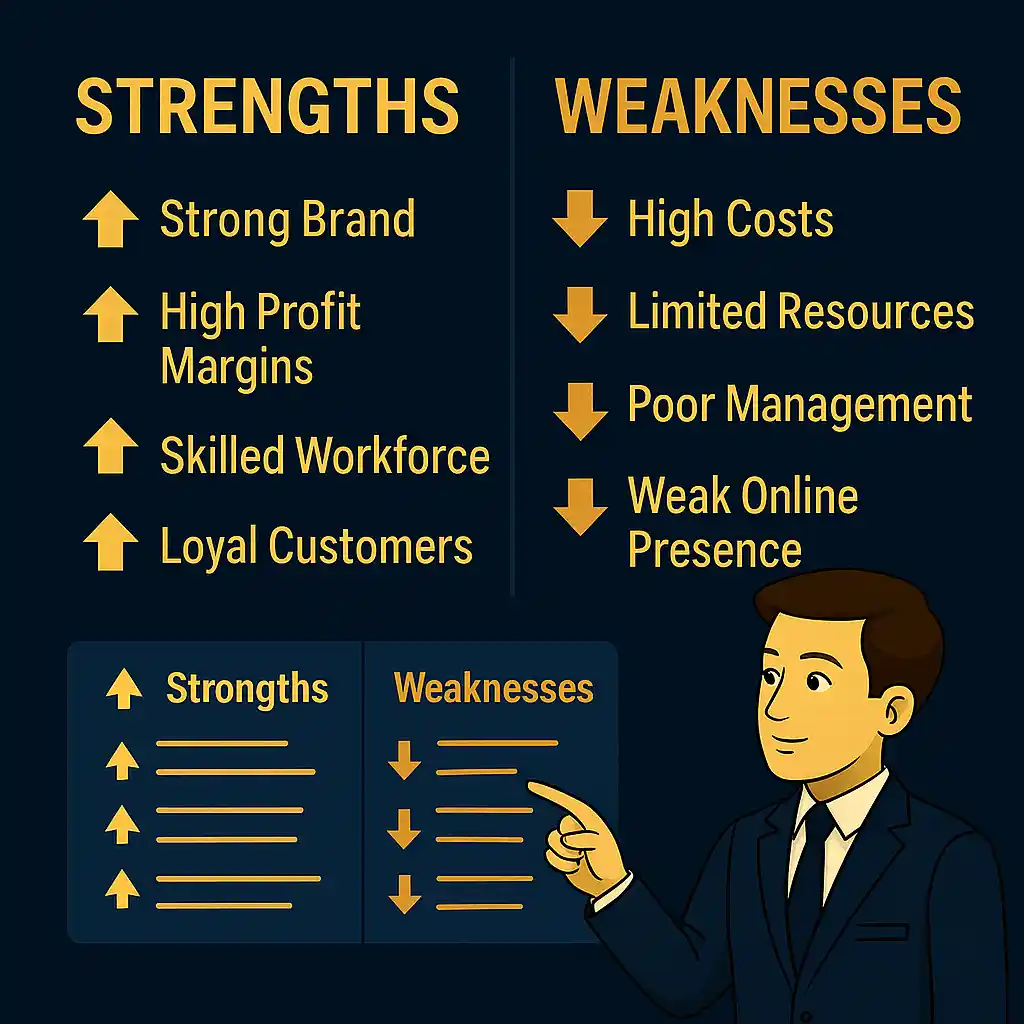
Strengths are internal advantages that help a company grow.
Key Strength Indicators:
- Strong brand value
- High promoter holding
- Unique products or technology
- Strong financials (ROE, ROCE, OPM)
- Large customer base
- Strong distribution network
- Industry leadership
- Low cost of production
- Patents or proprietary tech
Example Strengths:
- Tata Motors: EV leadership
- Asian Paints: Distribution dominance
- HDFC Bank: Strong asset quality
B. Weaknesses: What’s Holding the Company Back?
Weaknesses are internal problems that stop a company from growing faster.
Key Weakness Indicators:
- High debt
- Low profit margins
- Weak management
- Frequent losses
- Poor corporate governance
- High employee turnover
- Customer complaints
- Technological lag
Example Weaknesses:
- Vodafone Idea: Debt + network issues
- Jet Airways: Poor management decisions
Finding weaknesses helps you avoid risky investments.

C. Opportunities: What Future Potential Exists?
Opportunities are external factors that can boost company growth.
Key Opportunity Indicators:
- Growing industry demand
- Government support
- New product lines
- International expansion
- New technology adoption
- Increasing market share
- Rising consumer trends
Example Opportunities:
- Renewable energy demand → benefit to Adani Green, Tata Power
- Defence manufacturing push → benefit to HAL, BEL
- EV adoption → benefit to Tata Motors, Exide
D. Threats: What Risks Can Hurt the Company?
Threats are external dangers that could weaken the business.
Key Threat Indicators:
- Market competition
- Changing government policy
- Rising raw material cost
- Entry of global players
- Technological disruption
- Economic slowdown
- Currency fluctuations
Example Threats:
- Zomato/Swiggy facing cloud kitchen competition
- IT companies facing global recession risks
Threat analysis protects your investment from future shocks.
4. Example: SWOT Analysis of an Automobile Company (Simplified)
Strengths
- Strong brand reputation
- Innovative R&D
- Large dealer network
Weaknesses
- High manufacturing cost
- Slow global expansion
Opportunities
- EV segment booming
- Export potential
Threats
- Global chip shortage
- New EV competitors
This is how fast and easy a SWOT analysis becomes with the right approach.
5. Benefits of Using SWOT Analysis
- Clear decision-making
- Easy comparison between companies
- Helps identify future multibaggers
- Reveals hidden risks
- Useful for both beginners and experts
6. Pro Tips for More Accurate SWOT Analysis
- Always use audited financial data
- Compare with 3–5 competitors
- Focus on long-term trends
- Re-check SWOT every year
- Look for patterns, not isolated events
Conclusion: SWOT Analysis Makes You a Smarter Investor
Whether you are picking stocks or evaluating businesses, SWOT provides a complete 360° view. It simplifies complex company data, highlights opportunities, and warns you about risks.
Smart investors do SWOT — emotional investors lose money.










Leave a Reply