

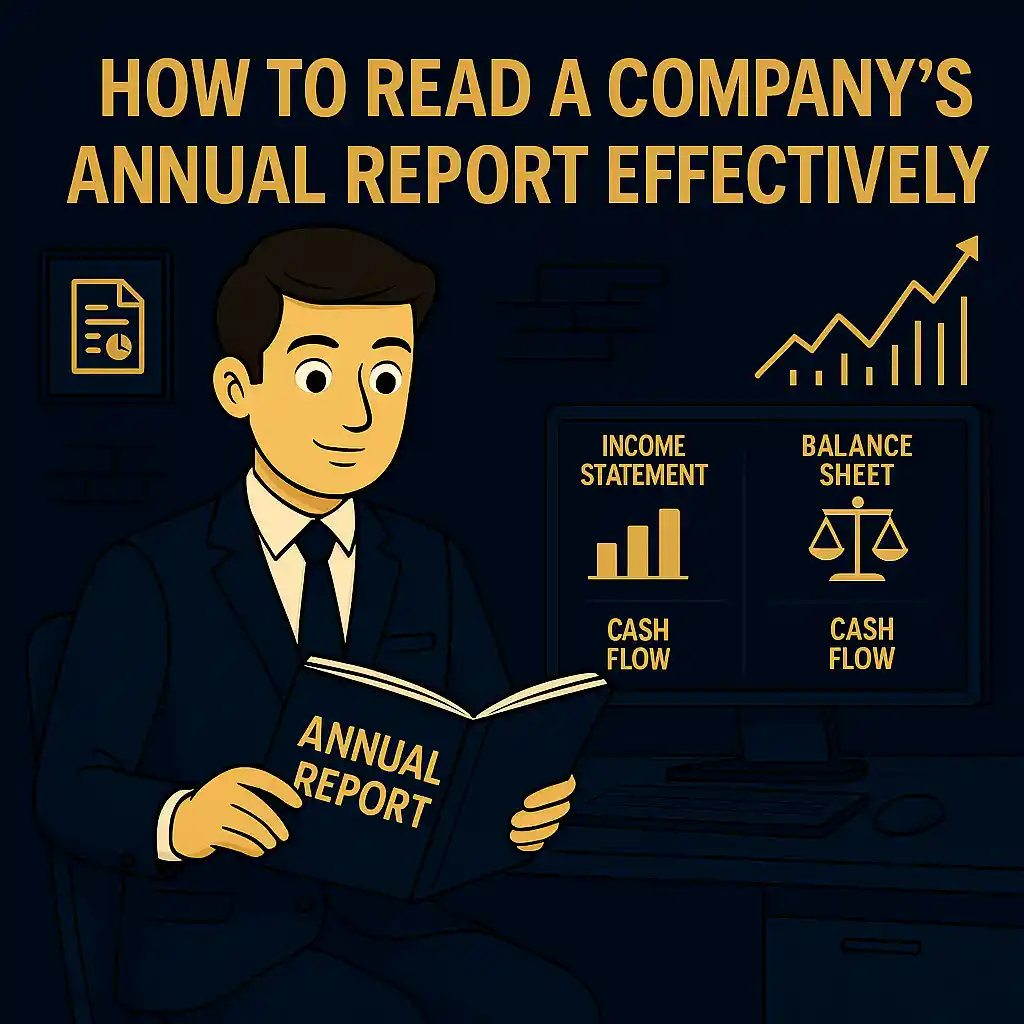
Introduction: Why an Annual Report Is the Most Powerful Document for Investors
Every strong investment decision begins with understanding the company inside-out — and the annual report is the single most reliable document that reveals the truth behind a company’s performance, risks, opportunities, and future direction.
Whether you are a beginner or an experienced investor, learning how to read annual reports effectively can help you:
- Identify high-quality companies
- Avoid risky or fraudulent businesses
- Spot early signs of multibaggers
- Understand management quality
- Predict future earnings potential
This guide breaks down the annual report into simple, actionable sections so you know exactly where to look and what to ignore.
1. What Is an Annual Report?
An annual report is a detailed summary of a company’s:
- Financial results
- Business performance
- Management decisions
- Risks
- Future plans
It is released every year and contains the most accurate information — not hype, not news, not rumors.
2. Why You Should Read Annual Reports Before Investing
✔ Real Data (No Manipulation)
Numbers in the annual report are audited and verified.
✔ Understanding Business Model
It explains what the company does, how it earns, and its long-term strategy.
✔ Identifying Risks Early
You’ll see warnings before the market reacts.
✔ Tracking Management Quality
Promoters’ honesty and vision become clear.
✔ Finding Hidden Opportunities
Many future multibaggers show early signs in their AR.
3. The 10 Most Important Sections of an Annual Report (And How to Read Them)
1️⃣ Chairman’s / CEO’s Letter
This section reveals management’s mindset.
Look for:
- Clear long-term vision
- Honest discussion about failures
- Achievements backed by numbers
- Focus on growth sectors
Red flags:
- Overpromising
- Blaming external factors
- No mention of challenges
2️⃣ Management Discussion & Analysis (MD&A)
MD&A is the most important part for investors.

Focus on:
- Industry trends
- Demand & supply situation
- Company’s competitive position
- Future growth plans
- Risks mentioned by management
- Exports, capex, new product plans
Tip:
Strong companies clearly explain their competitive edge.
3️⃣ Business Overview
Understand:
- What the company sells
- Revenue sources
- Market share
- Customer segments
- Key products & services
This section helps you decide if the business has long-term potential.
4️⃣ Financial Statements (Balance Sheet, P&L, Cash Flow)
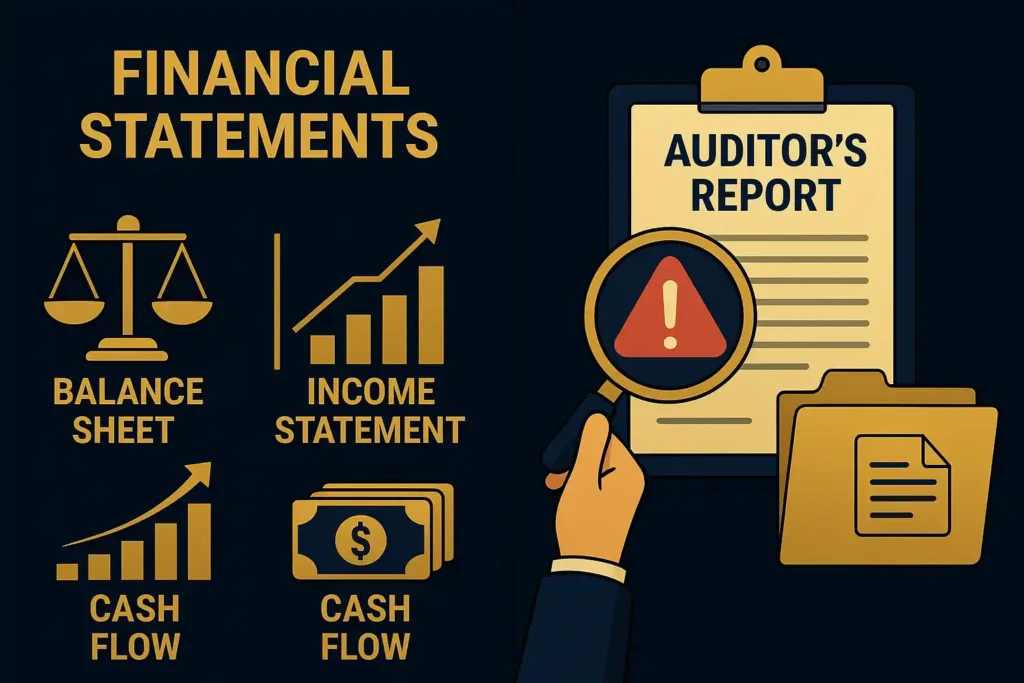
✔ Profit & Loss Statement
Check:
- Revenue growth
- Profit growth
- Operating margins
- Expense control
- Interest costs
✔ Balance Sheet
Check:
- Debt levels
- Reserves
- Fixed assets
- Receivables & payables
- Working capital cycles
✔ Cash Flow Statement
Most reliable indicator of real performance.
Look for:
- Positive operating cash flow
- Increasing free cash flow
- Capex plans
5️⃣ Notes to Accounts (Most Ignored but Critical)
Notes explain hidden details:
- Lawsuits
- Related party transactions
- Accounting adjustments
- Extraordinary expenses
- Real reason behind profits/losses
Fraudulent companies hide issues here.
6️⃣ Auditor’s Report

Look for:
- Any qualification (warning)
- Audit remarks
- Issues with internal controls
- Pending litigations
Red flags:
- Frequent auditor changes
- Auditors refusing to comment
- Notes on revenue recognition problems
7️⃣ Shareholding Pattern
A strong company usually shows:
- High promoter holding (50–70%)
- Increasing FII/DII holding
- Low pledged shares
Red flag:
Promoter selling stake consistently.
8️⃣ Segment-Wise Performance
See how each part of the business performs.
Look for:
- Highest profit-making segment
- Fastest growing segment
- Problem areas
9️⃣ Risk Factors
Every annual report has a detailed “Risk” section.
You should find:
- Competition risks
- Regulatory risks
- Raw material risks
- Market volatility
- Currency risk
If risk disclosure is vague → BAD SIGN.
🔟 CSR Activities & Corporate Governance
Shows management ethics.
Look for:
- Clean governance
- Ethical operations
- Good employee policies
Low governance = long-term danger.
4. How to Analyse Annual Report Like a Pro (Step-by-Step Framework)
Step 1: Read the CEO Letter
Understand vision + honesty.
Step 2: Read MD&A
Understand industry + long-term potential.
Step 3: Analyse financial statements
Focus on consistency, not one-year results.
Step 4: Study cash flow
Cash flow NEVER lies.
Step 5: Deep dive into notes
Hidden truths are here.
Step 6: Check shareholding
Promoter confidence ⇒ Investor confidence.
Step 7: Compare with previous 3–5 annual reports
Patterns tell the real story.
5. Red Flags to Watch in Annual Reports
🚩 Declining cash flow
🚩 High debt with low profits
🚩 Promoter pledging
🚩 Auditor warnings
🚩 Sudden jump in profits
🚩 Very low tax payments
🚩 Large “Other Income”
🚩 Confusing business explanation
These are signs of future trouble.
6. How Annual Reports Help You Find Multibagger Stocks
Strong multibagger companies usually show:
✔ Expanding margins
✔ Increasing cash flow
✔ Low debt
✔ Honest management discussion
✔ Increasing market share
✔ Continuous capex
✔ Leadership vision
All of these appear EARLY in annual reports.
Conclusion: Annual Report Reading Is the Superpower of Smart Investors
Reading an annual report may feel long, but it gives you clarity that no news channel, YouTube tip, or influencer can provide.
A smart investor uses:
- Facts
- Data
- Vision
- Management insight
Annual reports deliver all 4.
Learn them once → Profit for life.







Leave a Reply