

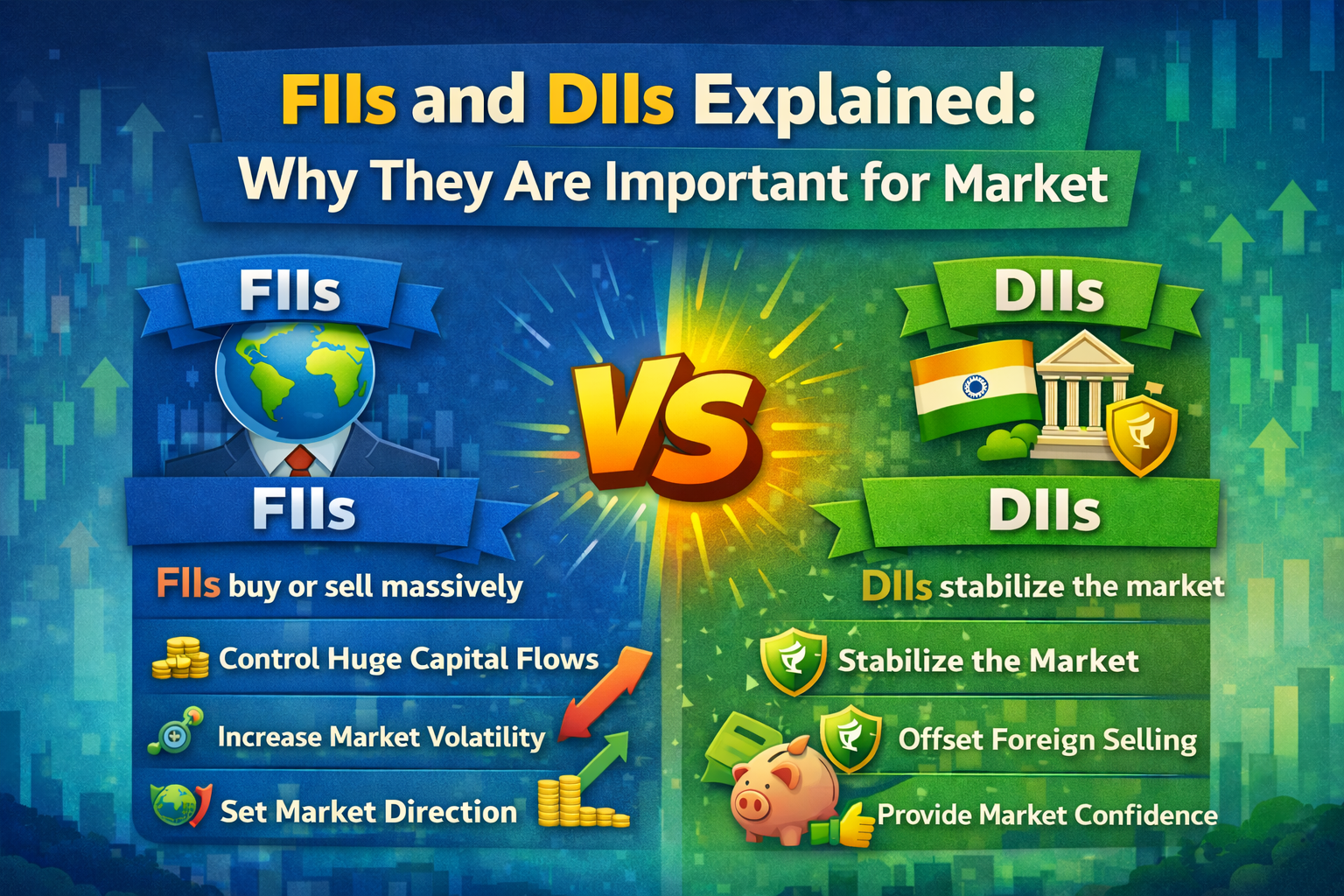
Introduction: Why FIIs and DIIs Matter in the Stock Market
Many people who invest in the stock market ask one question again and again:
Why are FIIs and DIIs important for market movement?
If you watch market news, you may see lines like:
- “Market falls because FIIs sold shares”
- “DIIs bought shares and saved the market”
This shows that big investors have a strong power over the market.
FIIs and DIIs buy and sell very large amounts of shares. Because of this, they can make the market go up, go down, or stay flat. If you are a small or retail investor, it is very important to understand how they work.
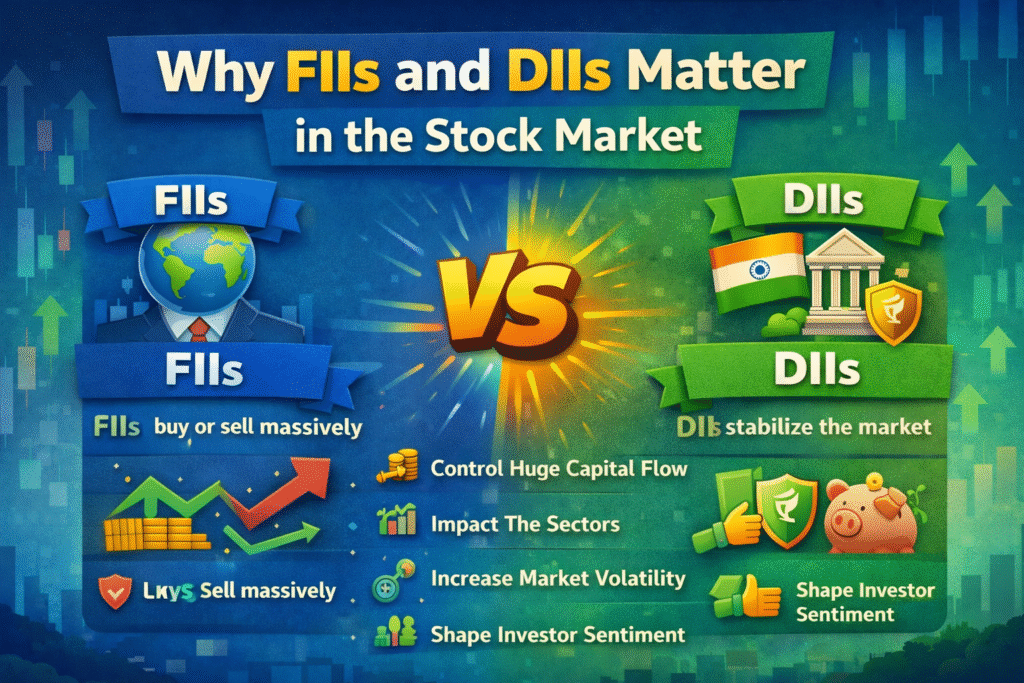
In this article, we will explain:
- What FIIs and DIIs are
- How they are different
- How they affect prices and market mood
- How you can use their data to invest better
Follow Admin on LinkedIn / Follow our LinkedIn Page for More Updates / Learn Trading through Paper Trade
What Are FIIs and DIIs?
Who Are FIIs?
FIIs means Foreign Institutional Investors.
They are big investors from other countries who invest money in our stock market.
Examples of FIIs are:
- Big mutual funds from other countries
- Pension funds
- Hedge funds
- Government investment funds
They invest very large amounts of money in shares, bonds, and other market products.
Who Are DIIs?
DIIs means Domestic Institutional Investors.
They are big investors from our own country.
Examples of DIIs are:
- Indian mutual funds
- Insurance companies
- Banks
- Pension and retirement funds
In India, DIIs help the market stay stable, especially when FIIs are selling shares.
Why FIIs and DIIs Are Important for Market Movement
1. They Invest Huge Amounts of Money
FIIs and DIIs invest crores of rupees at one time.
Even one big order can move a stock price very fast.
When many big investors buy together, the market goes up.
When they sell together, the market falls.
2. FIIs Often Decide the Market Direction
FIIs use global data, research, and economic news to take decisions.
Because of this, many people believe FIIs are “smart money”.
- When FIIs buy more, the market usually rises
- When FIIs sell more, the market usually falls
That is why investors closely watch FII buying and selling data on stock exchanges.
3. DIIs Help Control Market Falls
DIIs play a very important role during bad times.
When FIIs sell because of:
- Interest rate changes
- Global problems
- Wars or tensions
DIIs often start buying good quality shares.
This helps reduce fear and stops the market from falling too much.
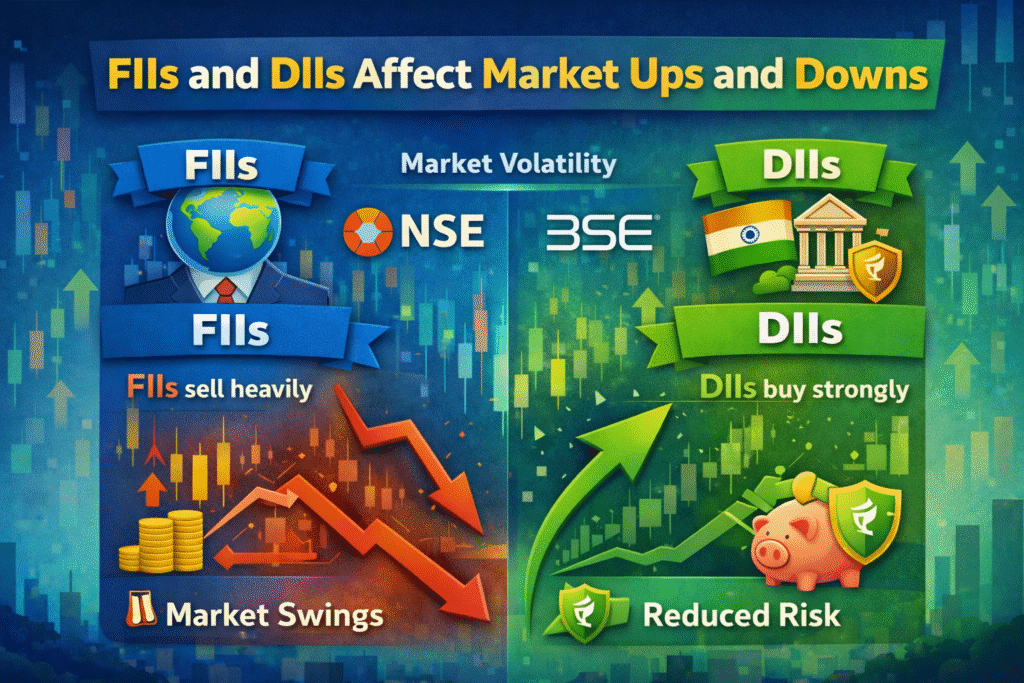
4. FIIs and DIIs Affect Market Ups and Downs
Market movement depends a lot on them.
- Heavy FII selling → big ups and downs
- Strong DII buying → market becomes calmer
If FIIs are more active, the market is more risky.
If DIIs are strong, the market feels safer.
5. They Decide Which Sectors Perform Well
Big investors do not buy randomly.
- FIIs may like IT, banks, and export companies
- DIIs may like FMCG, roads, and Indian consumption companies
When they move money from one sector to another, small investors often follow them.
6. They Build Long-Term Trust in the Market
When FIIs keep investing money, it shows that foreign investors trust the country’s economy.
When DIIs invest strongly, it shows that people inside the country believe in the market.
Together, this builds confidence for the future.
7. They Influence Retail Investors’ Feelings
Small investors watch FII and DII data daily.
- FII buying gives confidence
- FII selling creates fear
- DII buying gives hope during market falls
This data helps retail investors decide whether to stay calm or panic.
FIIs vs DIIs: Simple Comparison
| Feature | FIIs | DIIs |
|---|---|---|
| Where they are from | Other countries | Same country |
| How they invest | Think about the world market | Think for a long time |
| Risk level | Take more risk | Take medium risk |
| Main role | Decide market direction | Stop the market from falling too much |
| Effect of global news | Very high | Limited |
How Small Investors Can Use FII and DII Data
By understanding FIIs and DIIs, you can:
- Understand market direction early
- Avoid panic during market falls
- Find good long-term buying chances
- Invest along with big money
You can check FII and DII data daily on stock exchange websites and trusted finance websites.
Also Read – How Indian Elections Affect the Stock Market
Frequently Asked Questions (FAQs)
1. Why does the market fall when FIIs sell?
Because FIIs sell in very large amounts, prices fall quickly.
2. Can DIIs stop market falls completely?
Sometimes yes, but during big global problems, they can only reduce the fall.
3. Are FIIs always correct?
No. Even big investors can make mistakes.
4. Should small investors copy FIIs fully?
No. Use FII data as help, not as the only rule.
5. Why are DIIs becoming stronger in India?
Because more people are investing through SIPs, insurance, and pension plans.
6. Is FII selling always bad?
No. Sometimes it creates good chances to buy shares for the long term.
Conclusion: Why FIIs and DIIs Truly Matter
FIIs and DIIs are important because they control big money, market mood, and stability.
- FIIs move the market fast
- DIIs protect the market during falls
Together, they shape how the stock market behaves every day and over many years.
For small investors, watching FII and DII activity helps in making smarter and calmer investment decisions.








Leave a Reply