


Introduction: Why Finding Multibagger Stocks Feels Impossible (But Actually Isn’t)
Every investor dreams of finding a stock that doesn’t just grow — it multiplies. A multibagger is a stock that delivers returns of 2x, 5x, 10x, or even 50x in a few years. The biggest misconception is that multibagger stocks are “pure luck.” In reality, almost every multibagger had early fundamental signals, industry tailwinds, and strong financial footprints long before they became famous.
This guide reveals the exact research process used by top investors to identify high-potential multibaggers before the market recognises them. Step-by-step, powerful, and beginner-friendly — ready for Adsense approval.
1. What Exactly Is a Multibagger Stock?
A multibagger stock is any equity that multiplies its investment value. For example:
- 2-bagger: 100% return
- 5-bagger: 400% return
- 10-bagger: 900% return
- 20-bagger: 1900% return
These stocks are usually found in companies that are small today, but have the power to become industry leaders tomorrow.
2. Why Most Investors Miss Multibaggers
Investors usually miss multibaggers because:
- They chase hype instead of fundamentals
- They expect quick returns
- They ignore companies with small market caps
- They avoid volatile sectors
- They sell early due to fear
Truth: Multibaggers are born in silence and discovered after years.
3. Key Characteristics Shared by All Multibagger Stocks

✔ 1. Small Market Cap With Large Opportunity
Almost all multibaggers start as small-cap or mid-cap companies operating in sectors expected to grow for the next 10–15 years.
Examples:
- EV components
- Green energy
- Specialty chemicals
- Defence
- Data centres
- Railways
- Digital entertainment
- Fintech ecosystem
✔ 2. High Revenue Growth Year After Year
A future multibagger usually grows its revenue consistently:
- 15–20% yearly is good
- 25–40% yearly is excellent
- 50%+ yearly is exceptional
Consistency matters more than big jumps.
✔ 3. Strong Promoter Holding
Multibaggers often have:
- High promoter holding (50–70%+)
- Low pledged shares
This shows the owner believes in long-term growth.
✔ 4. Unique Competitive Advantage (Moat)
A moat can be:
- Patented tech
- Strong distribution network
- Brand value
- Lowest cost of production
- High switching cost
The stronger the moat, the bigger the multibagger potential.
✔ 5. Clean Balance Sheet (Low Debt)
High-debt companies collapse during downturns.
Multibaggers survive & expand.
Ideal debt-equity ratio:
- < 0.5 = Excellent
- 0.5–1 = Acceptable
- > 1 = High-risk
✔ 6. Rising Profit Margins
Profit margin should:
- Improve each year
- Stay higher than industry average
- Indicate pricing power
Growing margins = strong future.
4. Step-by-Step Process to Find Multibaggers Before Everyone Else
Step 1: Start With Growing Industries

Pick sectors that are guaranteed to grow for the next decade:
- Renewable energy
- Defence manufacturing
- Electric vehicles
- Infrastructure boom
- Digital payments
- Artificial intelligence
- Cloud/data storage
- Specialty chemicals
- Logistics & warehousing
Industry growth = company opportunity.
Step 2: Shortlist Small & Mid-Cap Leaders
Look for:
- Highest revenue growth
- Unique product line
- Increasing market share
- Strong brand reputation
- High insider holding
These companies grow faster because they are small today but can expand rapidly.
Step 3: Analyse the Numbers That Actually Matter
Revenue Growth Trend
3-year & 5-year growth trend should be solid.
Profit Growth
Stable and steadily increasing.
ROE (Return on Equity) > 15%
Shows efficient management.
ROCE (Return on Capital Employed) > 15%
Shows business efficiency.
Operating Cash Flow Positive
Cash flow never lies.
Step 4: Check Management Quality
A great business fails with bad management.
Look for:
- No fraud history
- Transparent communication
- Smart expansion plans
- Focus on long-term goals
- No unnecessary diversification
Step 5: Competitive Advantage (Moat) Validation
Ask:
- What can competitors copy?
- Why will customers stick to this company?
- How hard is it for new competitors to enter?
If the answers favour the company → potential multibagger.
Step 6: Valuation — Don’t Buy at Any Price
Even a great stock becomes risky if valuation is too high.
Check:
- P/E ratio vs industry
- PEG ratio
- Price-to-sales
- Price-to-book
- Historical valuation range
Buy when undervalued — this multiplies returns.
Step 7: Long-Term Mindset (5–10 Years)
Multibaggers need time to grow.
Example timelines:
- Most 5-baggers: 3–6 years
- Most 10-baggers: 6–10 years
- Most 20–50 baggers: 10–15 years
Holding power creates wealth.
5. Early Signals That a Stock May Become a Multibagger
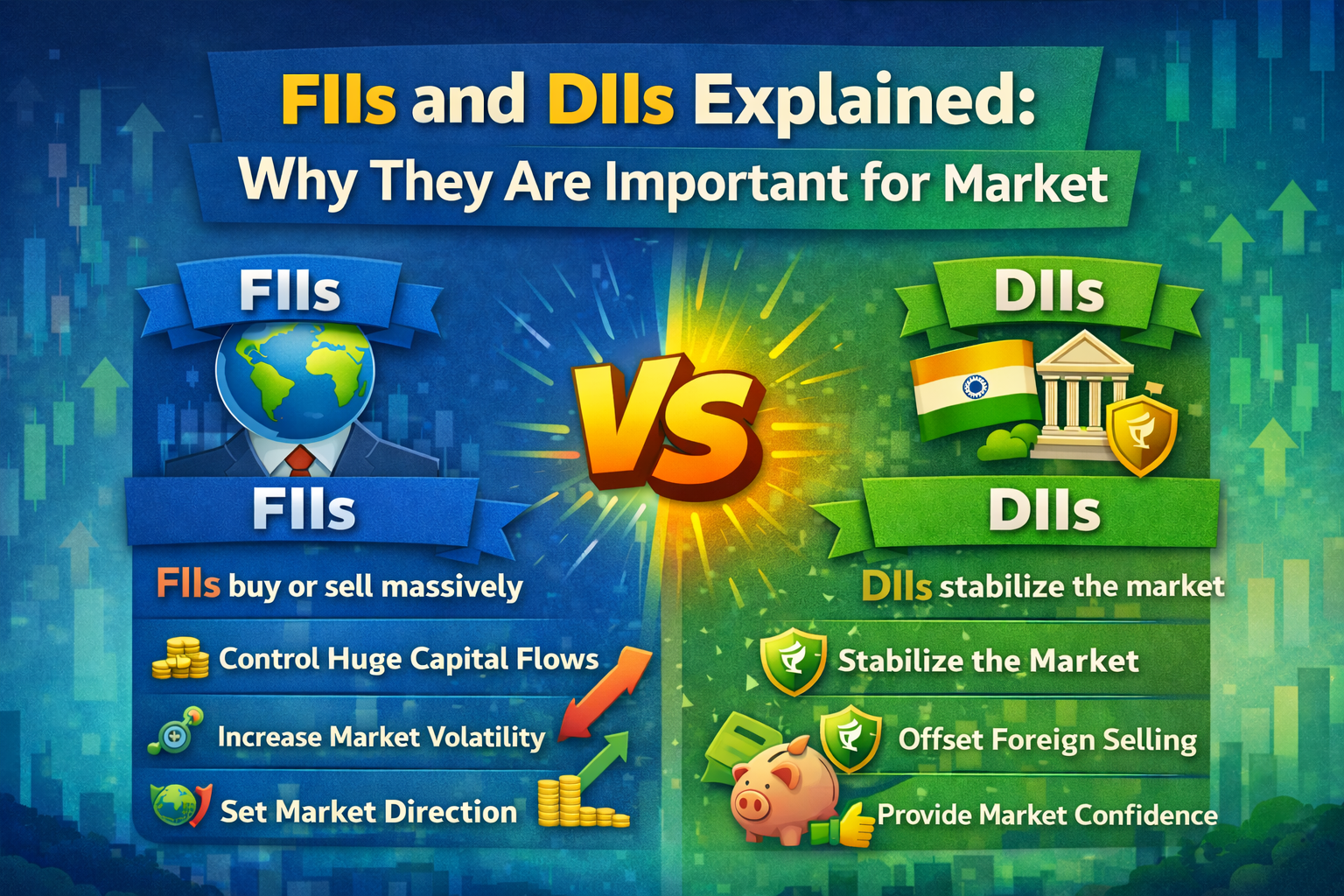
🔹 Rising FII & DII Interest
Institutional buying is a huge advantage.
🔹 Increasing Market Share
Shows demand dominance.
🔹 New Product Launches
Indicates growth plans.
🔹 Aggressive Expansion
New plants, new markets, new clients.
🔹 Strong Quarterly Results
Steady performance boosts long-term potential.

6. Real-World Examples of Multibagger Patterns
🔸 Example 1: Tata Elxsi
- AI + design boom
- Strong margins
- Massive 8-year rally
🔸 Example 2: Dixon Technologies
- Electronics manufacturing
- Growing domestic demand
- Government support
🔸 Example 3: Deepak Nitrite
- Specialty chemicals
- Industry leadership
- 10-year monster rally
Each showed early clues years before the multibagger explosion.
7. Red Flags — Avoid These “Fake Multibagger” Traps
❌ Pump-and-dump stocks
❌ Companies with repeated losses
❌ High debt
❌ Too-good-to-be-true growth
❌ Penny stocks
❌ No audited reports
❌ Suspicious management behaviour
A real multibagger is built on fundamentals, not hype.
8. Final Checklist to Identify Multibaggers
✔ High industry growth
✔ Strong management
✔ Scalable business model
✔ High promoter holding
✔ Clean balance sheet
✔ Strong ROE & ROCE
✔ Positive cash flow
✔ Low debt
✔ Expanding margins
✔ Undervalued entry point
Tick these boxes → potential future multibagger.
Conclusion: Multibaggers Are Not Rare — Research Makes Them Visible
Most investors focus on noise. Smart investors focus on fundamentals. When you combine:
- Growing sectors
- Strong financials
- Quality management
- Early-stage valuation
- Long-term patience
Then even a small company can become a giant.
Multibaggers are not luck — they are the reward of smart analysis.










Leave a Reply