

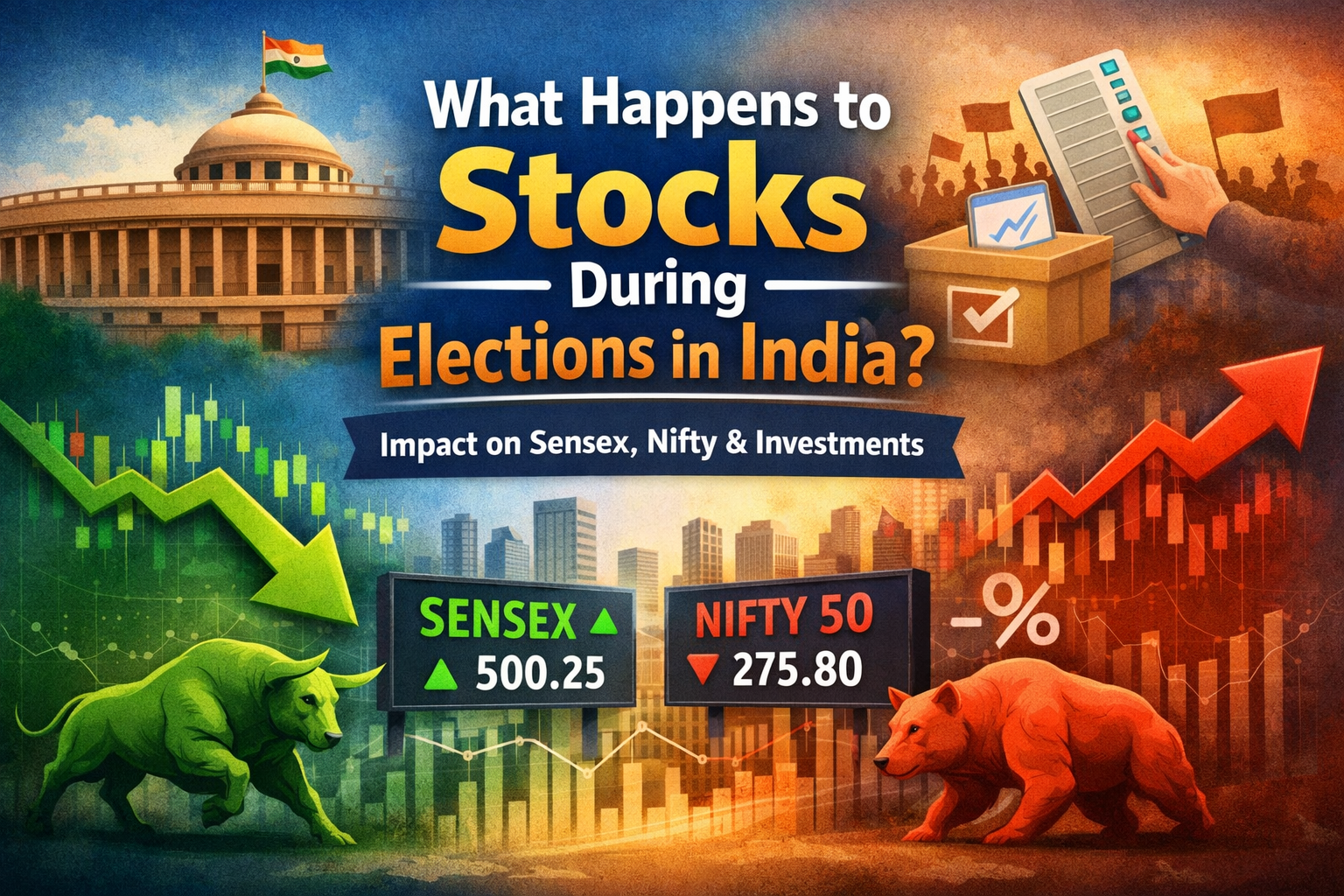
Indian Elections Affect the Stock Market
When elections come near in India, many investors start thinking:
What will happen to the stock market?
Some people believe prices will go very high.
Some people fear the market will fall badly.
Some people get confused and stop investing.
The truth is easy to understand. Elections do affect the stock market, but mostly for a short time. In the long run, the market cares more about company growth, profits, and stability.
In this article, we will explain in simple terms what happens to the Indian stock market during elections, so even beginners can understand it.
Follow Admin on LinkedIn / Follow our LinkedIn Page for More Updates / Learn Trading through Paper Trade
Why Elections Are Important for the Stock Market
The stock market is not only about today. It is about the future.
People buy shares based on what they think will happen later. Elections decide who will run the country and what rules will be made. That is why elections are important for the market.
During elections, investors think about:
- Will the government be strong?
- Will new plans help businesses?
- Will the economy grow?
- Will foreign investors trust India?
If things look good, the market feels happy. If things are unclear, the market becomes worried.
What Happens Before Elections?
The months before elections are full of confusion.
No one knows who will win. News keeps changing. Opinion polls say different things. Social media spreads many rumors. All this makes investors nervous.
Market Behavior Before Elections
- Sensex and Nifty go up and down fast
- No clear direction is seen
- Investors delay big decisions
- Traders become more active
The stock market during elections in India usually moves sideways before results. This means prices rise and fall, but do not move strongly in one direction.
Opinion Polls and the Market
Opinion polls can affect the market, but only for a short time.
If polls show a strong government, the market may rise for some days.
If polls show confusion, the market may fall.
But polls are often wrong. That is why smart investors wait for real results.
Election Result Day: Very Risky Day
Election result day is one of the most risky days for the stock market.
If Results Are Good
- Sensex and Nifty open higher
- Banking and PSU stocks rise fast
- Infrastructure stocks get buying
- Investors feel confident
If Results Are Unexpected
- The market may fall sharply
- Panic selling happens
- Prices change very fast
- New investors may lose money
Because of this, beginners should be very careful on the day of the result.
What Happens After Elections?
After the results, the biggest problem ends: confusion.
Now investors know who is in power and what direction the country may take.
Market After Elections
- The market becomes calmer
- Ups and downs reduce
- Different sectors move differently
- Long-term investors return
If the government is stable, the market usually performs well in the coming months.
Stock Market Performance in Past Elections
2004 Elections
- Results shocked the market
- The market fell badly in one day
- Panic everywhere
- Later, the market recovered
2009 Elections
- Stable government formed
- Sensex rose sharply in one day
- Investor confidence returned
2014 Elections
- Big hopes for development
- Strong rally after results
- Infrastructure and PSU stocks did well
2019 Elections
- The same government continued
- The market reacted positively
- Selected stocks performed well
History shows that short-term moves can be scary, but long-term growth depends on good governance.
Which Sectors Are Most Affected?
Banking and Finance
- Strongly affected by stability
- PSU banks react quickly
- Clear policies help this sector
Infrastructure
- Government spending helps
- Road, railway, and power stocks rise
- Election promises matter
PSU Stocks
- Controlled by the government
- Prices change fast after the results
- High risk during elections
FMCG
- More stable sector
- Depends on rural income
- Safer than others
IT and Pharma
- Less affected by the Indian elections
- Global markets matter more
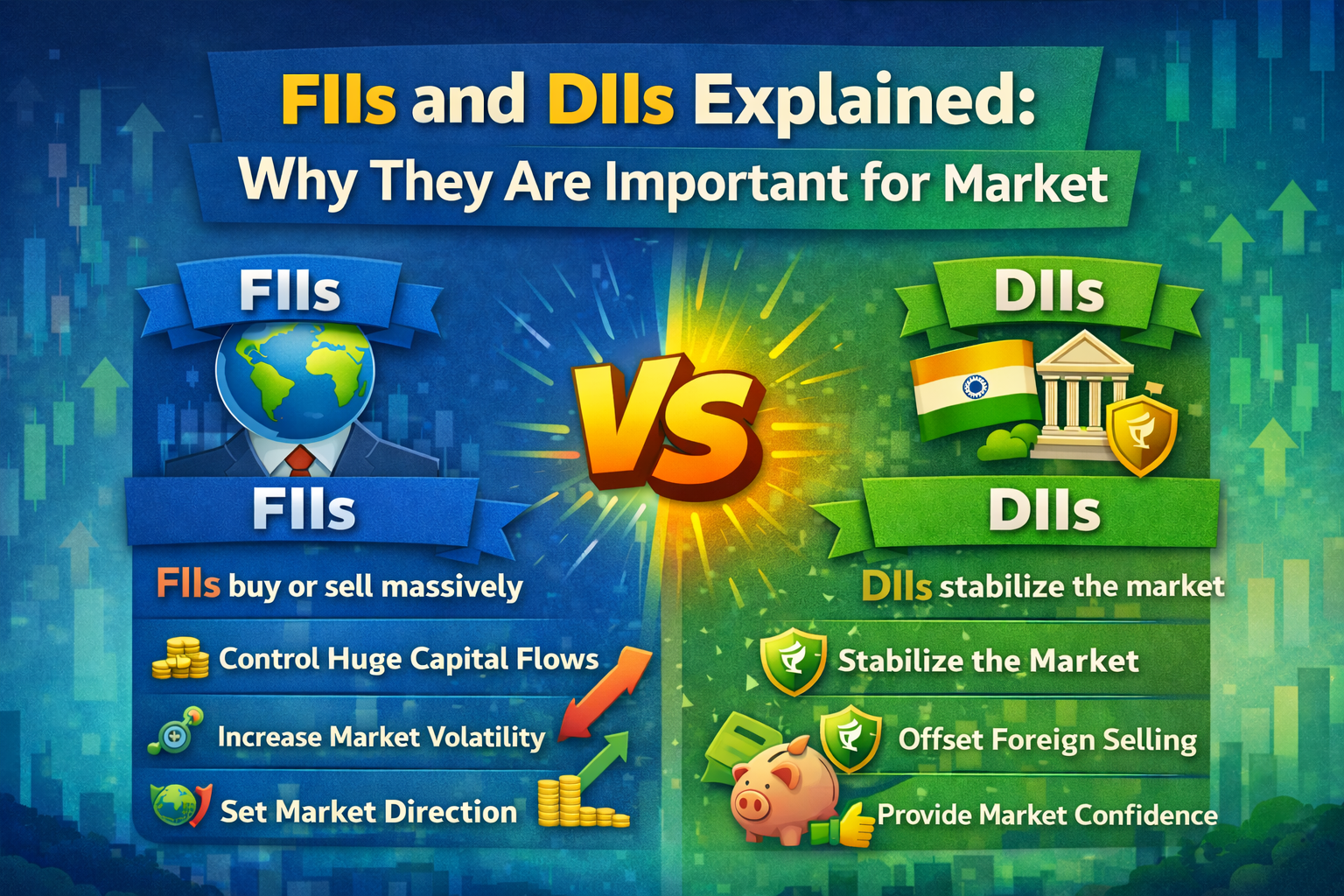
Role of Foreign Investors
Foreign investors carefully watch Indian elections.
- Stable government → more investment
- Uncertainty → less investment
They strongly affect big stocks. Still, in the long run, foreign investors believe in India’s growth.
Common Investor Mistakes During Elections
Many small investors lose money because of fear.
Mistakes
- Believing rumors
- Selling in panic
- Trading too much
- Expecting fast profits
Better Way
- Stay calm
- Invest in good companies
- Continue SIPs
- Ignore daily political news
Good companies last longer than elections.
Should You Invest During Elections?
Yes, if you think long-term.
Elections create fear, and fear creates good buying chances. Smart investors buy slowly and patiently instead of guessing results.
If you are investing for many years, elections should not stop you.
Does the Market Always Rise After Elections?
No, not every time.
Market depends on:
- How results match expectations
- Government actions
- Global economy
- Company profits
But usually, Indian stock market elections are followed by good long-term returns when stability stays.
Emotions and the Market
Elections bring strong emotions.
- Fear makes people sell
- Hope makes people buy blindly
Successful investors control their emotions and think logically.
Elections Are Short, Growth Is Long
In the long run, markets care about:
- Economic growth
- Company earnings
- Business expansion
- New ideas and innovation
Elections make noise, but growth decides the future.
Important Points to Remember
- Elections increase short-term ups and downs
- The result day is risky
- Long-term investing works best
- Different sectors react differently
- Patience gives rewards
Conclusion
Indian elections affect the stock market mainly for a short time. Before and during results, emotions control prices. After elections, the market again focuses on company strength and growth.
For long-term investors, elections are not something to fear. They can be a chance to invest wisely.
In the end, the stock market rewards patience and discipline, not predictions.








Leave a Reply