


Introduction: Why Finding Undervalued Stocks Is the Real Game-Changer
The Indian stock market is full of opportunities, but real wealth is created when you buy great companies at the right price. Undervalued stocks give you the perfect entry — low risk, high upside, and massive long-term wealth creation potential.
But spotting undervalued stocks isn’t about guessing or tips. It’s a proper, structured research system used by smart investors, fund managers, and value investors. This guide breaks down the exact process to identify undervalued stocks in India — simple, accurate, and beginner-friendly.
1. What Is an Undervalued Stock?
An undervalued stock is a company whose current market price is lower than its true (intrinsic) value.
Why does this happen?
- Market overreacts to temporary news
- Investors misunderstand financials
- Company is in a sector that’s temporarily out of favor
- Market sentiment is low
- A hidden potential is unnoticed
Buying such stocks right before the re-rating can create multibagger-level returns.
2. Why Stocks Become Undervalued in India
Here are the most common reasons:
✔ Temporary quarterly slowdown
Business is stable, but one bad quarter triggers selling.
✔ Negative news not linked to long-term fundamentals
Example: Short-term sector decline, raw material spike.
✔ Low analyst coverage
Many small & mid-cap gems remain undiscovered.
✔ Strong fundamentals, weak sentiment
This creates perfect buying opportunities.
✔ Broader market correction
Even good companies fall due to fear-driven selling.
When value meets patience → returns multiply.
3. How to Spot Undervalued Stocks in India (Step-by-Step)
Step 1: Compare Price With Intrinsic Value

Intrinsic value is the real worth of a company.
To check undervaluation, compare:
- Market Price
vs - Intrinsic Value (calculated using financials)
A company is undervalued if:
👉 Market Price < Intrinsic Value
Ways to calculate intrinsic value:
✔ Discounted Cash Flow (DCF)
Advanced, but accurate for stable companies.
✔ Benjamin Graham Formula
Perfect for beginners.
✔ PE, PB, EV/EBITDA comparison
Quick & effective valuation comparisons.
Step 2: P/E Ratio Comparison
A stock becomes undervalued when:
- PE < industry PE
- PE < company’s historical PE
- PE < competitors
Example:
If sector PE = 25
Company PE = 14 → undervalued
But ONLY if fundamentals are strong.

Step 3: P/B Ratio Check (Especially for Banks & NBFCs)
A stock is undervalued if:
- PB < 1 (very attractive)
- PB < industry PB
- PB < historical average
For financials, PB is the king.
Step 4: Strong Cash Flow but Low Price
This is the biggest hidden signal.
If a company:
- Generates high cash flow
- Has increasing free cash flow (FCF)
- But stock price is still down
→ The stock is highly undervalued.
Step 5: Low Debt, Strong Balance Sheet
Debt ruins valuation.
Low debt improves valuation.
Check:
- Debt-to-Equity < 0.5
- Interest coverage > 3
- Free cash reserves
Undervalued + Low debt = Safe investment.
Step 6: High ROE & ROCE (But Low Valuation)
If:
- ROE > 15%
- ROCE > 15%
- Profit growth strong
- BUT stock price low
→ The stock is undervalued due to market ignorance.
Step 7: Consistent Profit & Revenue Growth
A quality company should show:
- Rising revenue
- Rising profit
- Stable or increasing margins
If growth continues but price doesn’t move → undervalued.
Step 8: Check for Dividend History
Companies with:
- Stable or rising dividends
- Low price fall
- Strong cash reserves
are usually safe undervalued opportunities.

Step 9: Insider & Promoter Buying
Promoter purchasing shares = strong confidence.
If:
- Promoters are increasing stake
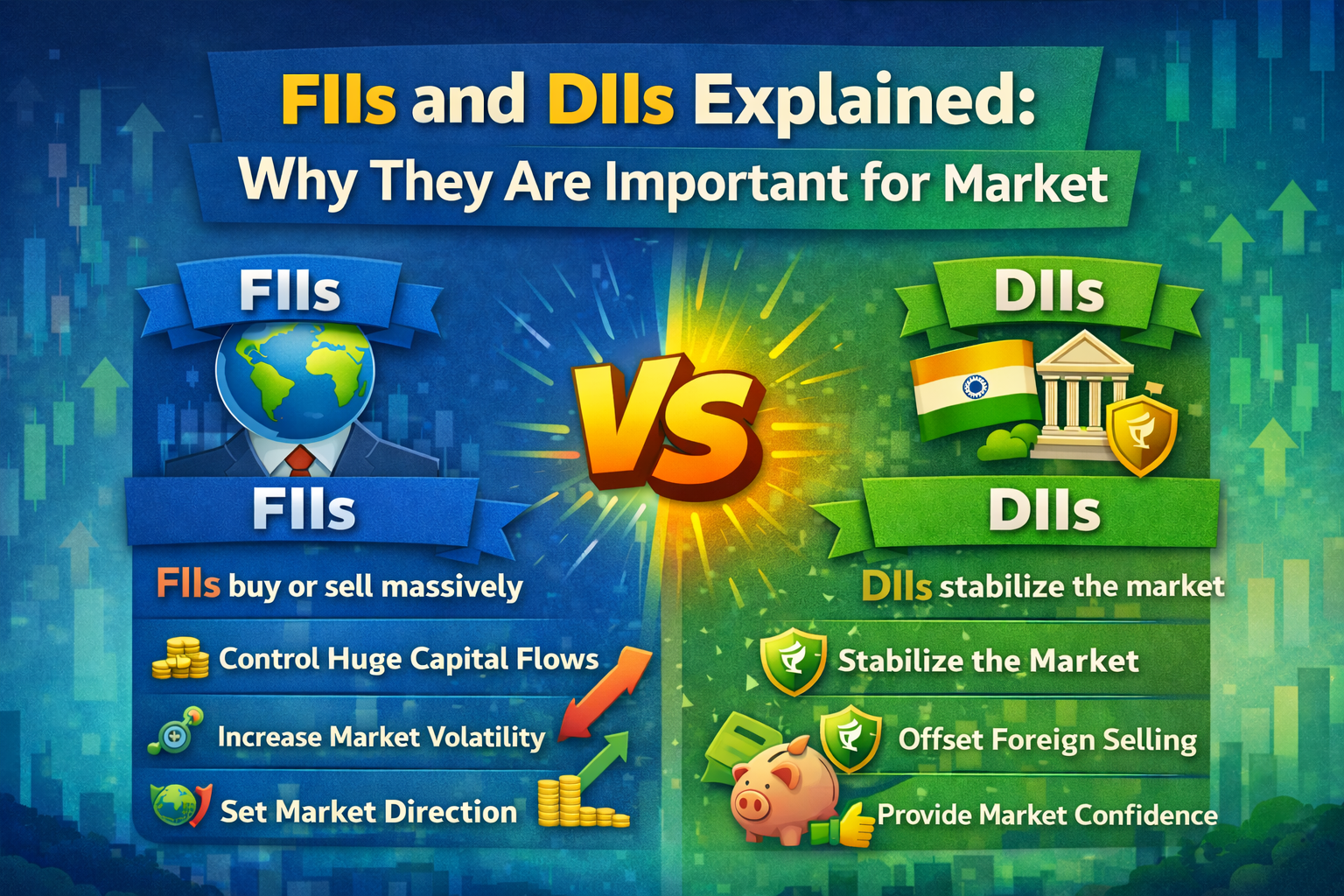
- FIIs/DIIs are accumulating
→ Smart money knows the stock is undervalued.
Step 10: Price vs Fair Value on Research Sites
Use platforms like:
- Screener
- Ticker
- Trendlyne
- Simply Wall Street
If fair value is 30–60% above market price → undervalued.
4. Real-Life Examples of Undervalued Stocks Turning Big Returns
🔹 1. Titan (2005–2010)
Ignored initially → later became a giant.
🔹 2. L&T Finance (2013–2017)
Low PB valuation → re-rated massively.
🔹 3. Canara Bank (2020–2023)
Undervalued due to NPA fear → huge rerating.
🔹 4. Deepak Nitrite (2015–2020)
Strong fundamentals, low price → multibagger.
All were undervalued gems at some point.
5. Checklist to Confirm If a Stock Is Undervalued (Use This Before Buying)
✔ PE lower than industry
✔ PB lower than peers
✔ High ROE/ROCE
✔ Strong balance sheet
✔ High cash flow
✔ Revenue & profit growth
✔ Promoter buying
✔ Sector expected to grow
✔ Price far below intrinsic value
Tick 7 out of 9 → strong undervalued pick.
6. Warning: Not Every Low-Priced Stock Is Undervalued
Avoid if:
❌ Constant losses
❌ Very high debt
❌ Management scandals
❌ Promoter pledging
❌ Negative cash flow
❌ Falling market share
❌ Penny stock hype
Low price ≠ undervalued
Low valuation + strong fundamentals = undervalued
Conclusion: Undervalued Stocks Build Long-Term Wealth
Smart investors don’t chase trending stocks — they accumulate undervalued companies silently and hold until the market recognises their true value.
Undervalued investing is not about luck.
It is about:
- Research
- Patience
- Discipline
- Buying quality at discount
This is how long-term wealth is created.










Leave a Reply