

By My Stock Bzaar News Desk | November 2025
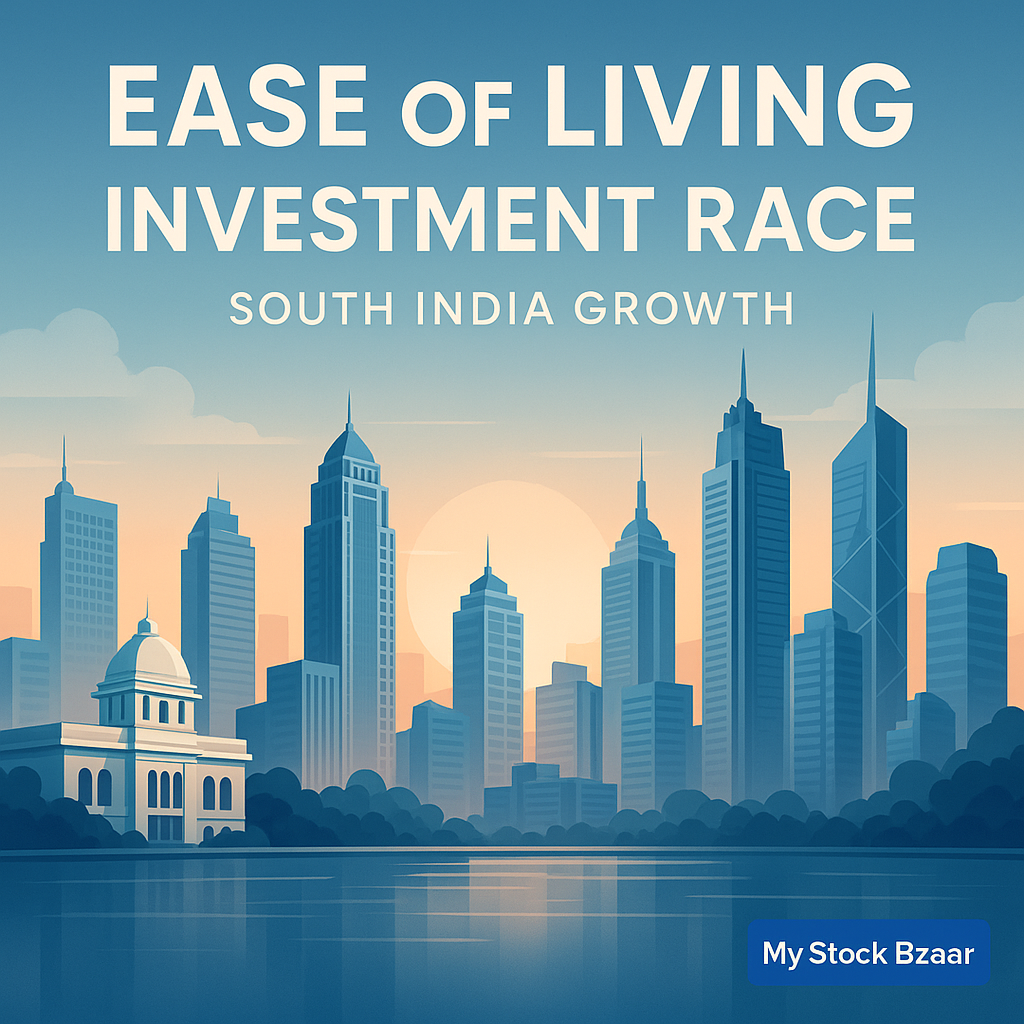
India’s southern states—Tamil Nadu, Karnataka, Telangana, Andhra Pradesh, and Kerala—are emerging as the country’s new investment magnets, driven not only by their industrial prowess but also by their superior “ease of living” environment. This shift signals a transformation in how businesses and investors evaluate regions — no longer just by incentives or infrastructure, but also by quality of life, governance, and sustainable growth.
As India’s growth momentum accelerates post-pandemic, the South is leading the charge. The combination of strong governance, skilled talent, infrastructure upgrades, and citizen-friendly policies has positioned these states at the forefront of India’s economic resurgence.
1. The Investment Race: A New South Rising
In recent years, the southern states have become the engine of India’s economic revival, contributing over 35% of India’s GDP while hosting several global manufacturing and IT giants.
From Chennai’s auto corridor to Bengaluru’s tech ecosystem, and from Hyderabad’s startup boom to Kerala’s tourism and healthcare excellence, the southern region is witnessing an unprecedented investment surge.
This isn’t a coincidence — it’s the result of decades of sustained policy focus, human capital investment, and urban livability improvements.
“Investors today look beyond incentives — they look for stability, human development, and quality of life. The southern states have mastered this balance,” said an industry analyst from CII.
2. Ease of Living: The New Economic Magnet
Traditionally, India’s investment narrative revolved around “ease of doing business.”
But as the competition among states intensifies, “ease of living” has become an equally critical factor.
Ease of living parameters—such as urban amenities, housing affordability, public safety, healthcare access, air quality, and digital infrastructure—are now pivotal in attracting global and domestic investors who want their employees and communities to thrive.
According to NITI Aayog’s Ease of Living Index, Bengaluru, Chennai, and Hyderabad consistently rank among the top 10 Indian cities, offering an appealing blend of infrastructure, lifestyle, and governance.
These scores have become soft power tools for states pitching themselves to investors.
3. Tamil Nadu: India’s Manufacturing Powerhouse
Tamil Nadu is setting benchmarks with its diverse industrial base — automobiles, electronics, renewable energy, and textiles.
- Chennai has become a global auto hub hosting Hyundai, BMW, and Ola Electric.
- The state’s $1 trillion economy target by 2030 shows its aggressive growth roadmap.
- Tamil Nadu’s focus on green energy and women’s workforce participation adds another layer of sustainability to its development model.
The state government’s recent “Ease of Doing Business 2.0” initiative integrates citizen and investor services, making business processes paperless and transparent.
But what really distinguishes Tamil Nadu is its urban livability — good roads, reliable electricity, and a strong education system that feeds skilled manpower into its industries.
4. Karnataka: Tech, Talent, and Transformation
Karnataka remains the tech nerve center of India. With Bengaluru leading as the Silicon Valley of the East, the state is now expanding its focus beyond IT to deep tech, aerospace, and electric mobility.
Ease of living has been a core part of Karnataka’s appeal:
- Consistent investment in urban planning and transport systems, like Namma Metro’s expansion.
- High literacy and an entrepreneurial culture.
- The Karnataka Startup Policy 2025 that supports innovation through incubation and seed funding.
Moreover, Karnataka’s climate and culture have made it a magnet for professionals, which in turn attracts global companies.
Tech giants like Apple, Amazon, and Google have expanded operations in Bengaluru, citing both infrastructure and workforce quality as deciding factors.
5. Telangana: India’s Start-up Capital with a Vision
Telangana, one of India’s youngest states, is rapidly becoming an investment favorite.
Under its “Ease of Doing Business” reforms, Hyderabad has transformed into a world-class urban hub, attracting companies like Microsoft, Meta, and Amazon to set up their largest campuses outside the U.S.
What’s unique about Telangana’s model:
- T-Hub and We-Hub nurturing over 2,500 startups.
- TS-iPASS (single-window clearance system) offering approvals within 15 days.
- Consistent ranking among the top three states in India for business reforms.
Yet, what truly stands out is the ease of living — smart roads, reliable electricity, strong healthcare systems, and safety make Hyderabad one of India’s best cities to live in.
6. Andhra Pradesh: Ports, Power, and People-Centric Growth
Andhra Pradesh has steadily positioned itself as a logistics and manufacturing hub.
With six operational ports and four more under development, it is the gateway for India’s eastern maritime trade.
Key highlights include:
- Andhra Pradesh Industrial Corridor (APIC) connecting key cities to boost exports.
- Focus on renewable energy and green industrial clusters.
- Significant push for affordable housing and social infrastructure, improving the quality of life for its citizens.
Ease of living indicators such as housing, water, and urban safety have seen remarkable improvement under the Smart City Mission, particularly in Vishakhapatnam and Amaravati.
7. Kerala: The Human Development Model
Kerala has long been recognized for its human development achievements — high literacy, gender equality, healthcare, and social welfare.
Now, it’s turning those advantages into an economic strategy.
The state is pushing for “Knowledge-Economy Zones” that link education, startups, and sustainable industries.
In addition:
- Its Kerala Infrastructure Investment Fund Board (KIIFB) model has drawn attention globally.
- Tourism, healthcare, and IT parks (like Technopark and Infopark) are major drivers.
While Kerala faces infrastructure constraints compared to its southern peers, its ease of living remains unmatched — clean environment, strong civic governance, and educated workforce make it a quality-of-life powerhouse.
8. Data-Driven Governance: The Secret Ingredient
One of the biggest differentiators for southern states is their data-driven governance model.
From real-time dashboards in Telangana to citizen feedback portals in Tamil Nadu and Karnataka’s integrated grievance systems, these states use data not just to track progress but to deliver measurable improvements in daily life.
This governance efficiency reduces red tape, increases transparency, and ensures citizens and investors both benefit.
9. Infrastructure & Connectivity: Building the Backbone
Ease of living and investment go hand in hand with connectivity.
The southern region leads in:
- Highway and metro expansions (Bengaluru, Chennai, Hyderabad).
- Smart city projects using IoT and AI for waste, water, and traffic management.
- Airport growth — Chennai, Hyderabad, and Kochi rank among India’s top 10 busiest airports.
- Port modernization in Tamil Nadu and Andhra Pradesh supporting exports.
Such infrastructure ensures both industrial efficiency and citizen comfort, creating a holistic ecosystem attractive to both investors and professionals.
10. Quality of Life as an Economic Strategy
Investors increasingly recognize that a happy, skilled, and healthy workforce is their biggest asset.
Southern states are leveraging this idea strategically.
Features like:
- Affordable housing policies in Hyderabad and Chennai,
- Green urban planning in Bengaluru,
- Healthcare access in Kerala, and
- Women workforce participation across Tamil Nadu and Telangana
are helping these states sustain growth while improving human capital.
This is the essence of modern economic competitiveness — not just profits, but purpose and people.
11. National Implications: Setting a New Benchmark
The success of the southern states offers a blueprint for the rest of India.
Their approach shows that:
“Economic growth and quality of life are not mutually exclusive — they reinforce each other.”
States like Uttar Pradesh, Gujarat, and Maharashtra are now studying the “Southern Model”, especially its focus on citizen-centric governance, digital transformation, and livability-linked development.
12. Challenges Ahead
Despite their achievements, challenges persist:
- Urban congestion and rising cost of living in metros like Bengaluru.
- Water scarcity and climate risks in Tamil Nadu and Telangana.
- Balancing industrial expansion with environmental sustainability.
Addressing these issues will determine how sustainable their growth truly is.
Yet, the southern states’ ability to adapt and innovate suggests that they are well-prepared for the next phase.
13. The Road Ahead: Sustainable and Inclusive Growth
The coming decade will see southern India as the focal point of global investments, especially in:
- Electric mobility
- Semiconductors
- Renewable energy
- AI and tech innovation
As these states continue to blend ease of doing business with ease of living, they will likely attract the next wave of multinational investment, reinforcing India’s position as the world’s fastest-growing major economy.
Conclusion
The rise of the South is not just an economic phenomenon — it’s a social, cultural, and policy revolution.
By prioritizing both prosperity and livability, the southern states are redefining what sustainable development means in India.
The message is clear:
“When people live better, economies grow faster.”
The investment race has begun — and the South has a head start.








Leave a Reply